Web3 is changing how the internet works. Learn everything about Web3, blockchain, crypto, DeFi, NFTs, and DAOs in this beginner-friendly guide.
Instead of platforms owning data, value, and identity, Web3 introduces an internet where users own what they create and use. Built on blockchain technology, Web3 combines decentralization, cryptocurrencies, smart contracts, and digital ownership into one evolving ecosystem.
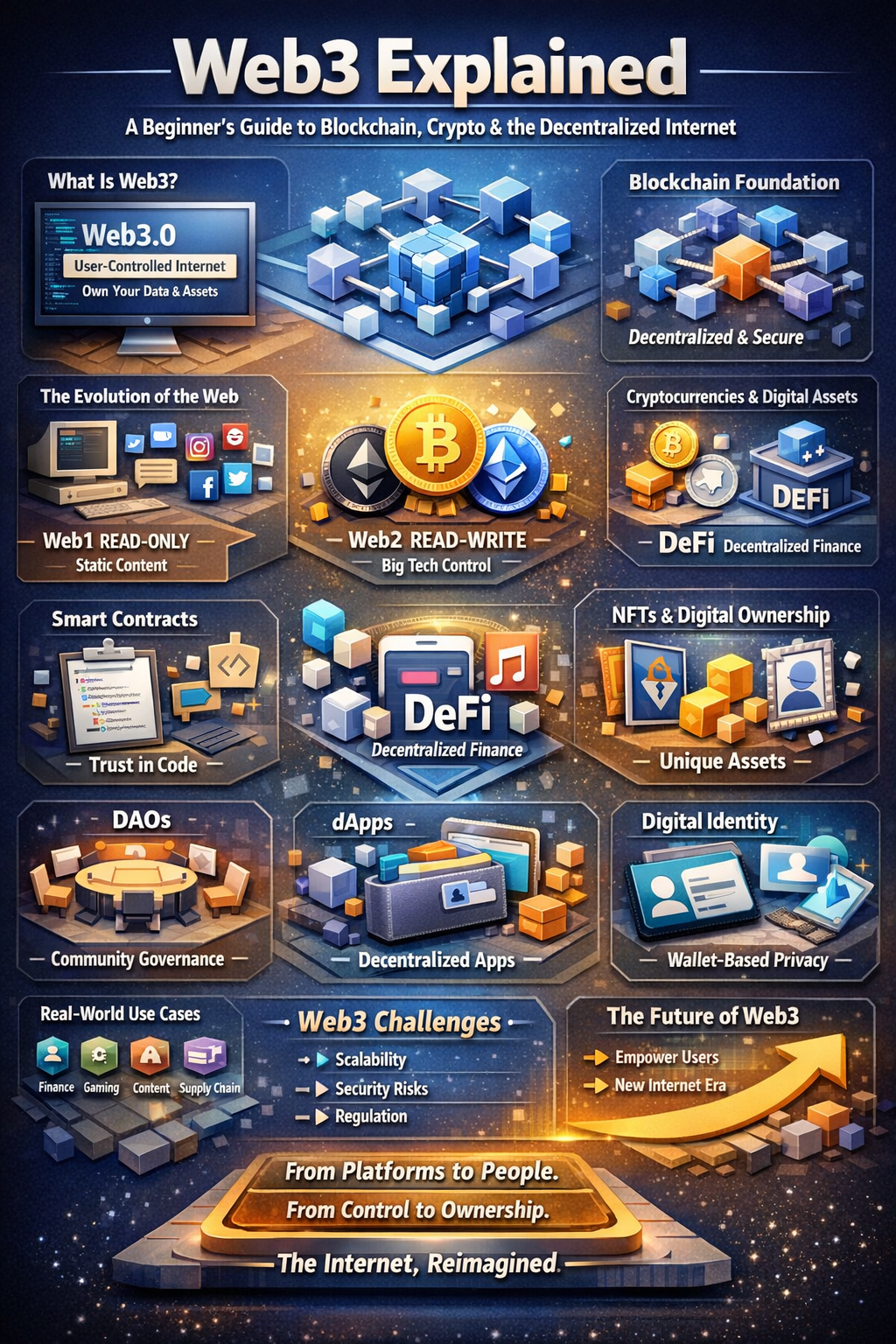
What Is Web3?
Web3 (also called Web 3.0) is the next evolution of the internet built on blockchain technology.The core idea of Web3 is simple, Users should control their data, digital assets, and online identity.
The Evolution of the Internet
✓Web1: Read-Only Internet
Static websites
No interaction
Information only
✓Web2: Read and Write Internet
Social media platforms
User-generated content
Centralized companies control data
Web2 made participation easy but introduced problems like data exploitation, censorship, and platform dependence.
✓Web3: Read, Write, and Own Internet
Web3 adds ownership.
In Web3:
Users own digital assets
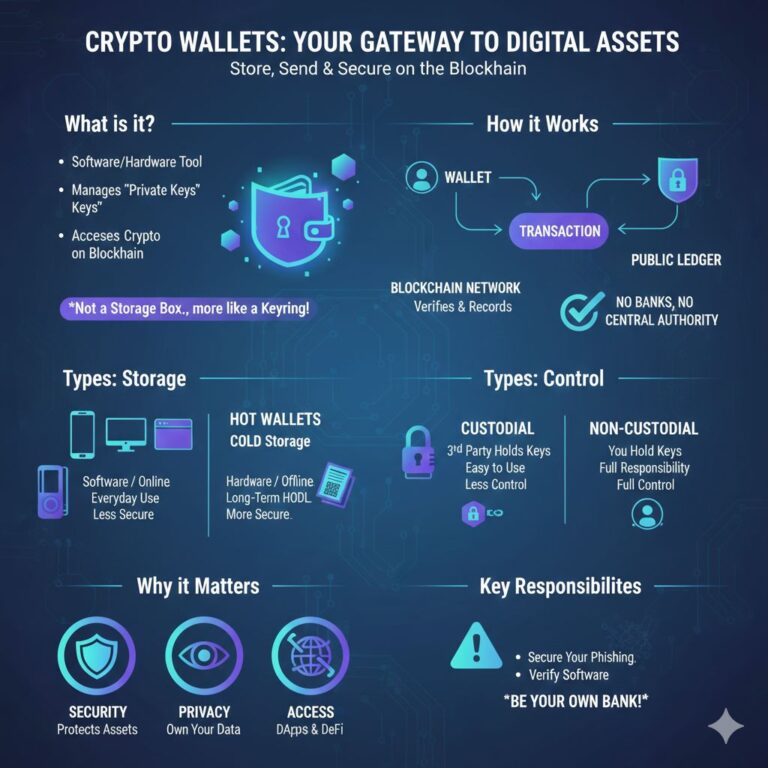
Identity is wallet-based
Trust comes from code, not companies
Blockchain: The Foundation of Web3
Blockchain is the backbone of Web3.
A blockchain is a shared digital ledger that records transactions across many computers. This makes it transparent and secure. Resistant to manipulation Because no single entity controls the system, blockchain enables decentralization.
Popular Web3 blockchains include:
⪼Ethereum
⪼Solana
⪼Polygon
⪼Avalanche
Each blockchain supports decentralized applications and smart contracts.
https://blockchainpeople.nl/understanding-blockchain-technology-a-beginner-friendly-guide/
Cryptocurrencies and Digital Assets
Cryptocurrencies are the native money of Web3.
They allow people to:
➢Send value globally
➢Store digital wealth
Participate in blockchain networks
Bitcoin introduced decentralized digital money. Ethereum expanded the idea by enabling smart contracts. In Web3, crypto is used for:
➢Payments
➢Governance
➢Network security
➢Incentives
Cryptocurrencies are not just investments.They are tools that power the decentralized internet.
Smart Contracts Explained Simply
Smart contracts are programs that run on blockchains.They automatically execute actions when conditions are met.No banks.No intermediaries.No trust required.
Examples include:
✓Automatic payments
✓NFT royalties for creators
✓DAO governance systems
Smart contracts are what make Web3 applications possible.
Decentralized Applications (dApps)
Decentralized applications (dApps) are Web3 apps built on blockchain networks.
Unlike traditional apps:
➺They don’t rely on centralized servers
➺They use smart contracts for logic
Users interact with dApps using crypto wallets instead of usernames and passwords.Common dApps include:
➺Decentralized exchanges
➺NFT marketplaces
➺Web3 games
➺Social platforms
Decentralized Finance (DeFi)
DeFi (Decentralized Finance) replaces traditional financial systems with blockchain-based alternatives.
With DeFi, users can:
▼Trade cryptocurrencies
▼Lend and borrow assets
▼Earn yields
▼Access financial services globally
Key benefits of DeFi:
▼Permissionless access
▼Transparency
▼Full user control
For many people, DeFi provides financial access where traditional banking fails.
NFTs and Digital Ownership
NFTs (Non-Fungible Tokens) represent ownership of unique digital items on the blockchain.
NFTs can represent:
✓Art
✓Music
✓Gaming items
✓Memberships
✓Digital identity
NFTs allow creators to:
✓Own their work
✓Earn automatic royalties
✓Build direct relationships with audiences
NFTs are about verifiable digital ownership, not speculation.
DAOs: How Web3 Organizations Work
DAOs (Decentralized Autonomous Organizations) are community-led organizations governed by blockchain code.
Instead of executives:
⪼Rules are transparent
⪼Decisions are voted on
⪼Power is distributed
DAOs are used for:
⪼Managing blockchain projects
⪼Funding initiatives
⪼Governing protocols
They enable global collaboration without centralized control.
https://blockchainpeople.nl/understanding-decentralized-autonomous-organization-dao/
Digital Identity and Privacy in Web3
Web3 introduces self-sovereign digital identity.
This means:
➢Users control their identity
➢No platform owns personal data
➢Selective information sharing
Instead of “Sign in with Google,” Web3 uses wallet-based authentication.
This improves privacy and reduces data misuse.
Web3 Culture and Philosophy
Web3 is not only technology, It is also a mindset.
Core Web3 values include:
✓Ownership over access
✓Transparency over secrecy
✓Community over corporations
✓Open-source collaboration
Popular Web3 phrases include:“Don’t trust, verify”“Not your keys, not your crypto”
Web3 culture encourages education, patience, and long-term thinking.
Real-World Web3 Use Cases
Web3 is already impacting multiple industries.
Finance
Cross-border payments
Stablecoins
Open banking systems
Gaming
Player-owned assets
Open economies
Interoperable items
Content Creation
Direct monetization
NFT memberships
Creator ownership
Supply Chain
Transparency
Provenance tracking
Fraud prevention
Challenges Facing Web3
Web3 is still early and evolving.Key challenges include:
➺Complex user experience
➺Scalability issues
➺Security risks
➺Regulatory uncertainty
Education and better design will drive adoption.
The Future of Web3
Web3 will not replace the current internet overnight, instead it will:
▼Integrate quietly
▼Improve ownership
▼Reduce platform dominance
Many users may interact with Web3 without realizing it. Just like the early days of the internet
Conclusion: Why Web3 Matters
From platforms to people.
From control to ownership.
From extraction to participation.
It is not perfect, but it offers a better foundation for the future internet. Education is the first step.That is what Web3 needs most.
About The Author