The €30 Trillion Problem: Why Europe’s Qivalis Stablecoin is the RWA Breakthrough the Market Needs
The consortium of ten major European banks launching Qivalis signals a crucial shift in the global RWA race. Instead of waiting for regulation, TradFi is actively building the MiCAR-compliant Euro stablecoin required by the EU. This move validates blockchain’s utility in large-scale financial settlement and directly challenges US dollar dominance in the digital asset space, creating an immediate need for financial professionals to master MiCAR compliance.
The Real-World Scenario: Regulatory Gridlock vs. Digital Demand
For years, the European financial sector has faced two competing demands: the need for instant, cross-border digital settlement, and the fear of violating complex EU banking and money laundering laws. Traditional stablecoins (like USDT or USDC) offered the speed but lacked the regulatory backing necessary for massive institutional adoption. The solution couldn’t come from a tech startup; it had to come from the banks themselves. Qivalis, born from a consortium including ING, BNP Paribas, and UniCredit, represents the proactive financial response to this regulatory and technical tension.
The Core Analysis: Building the MiCAR Gold Standard
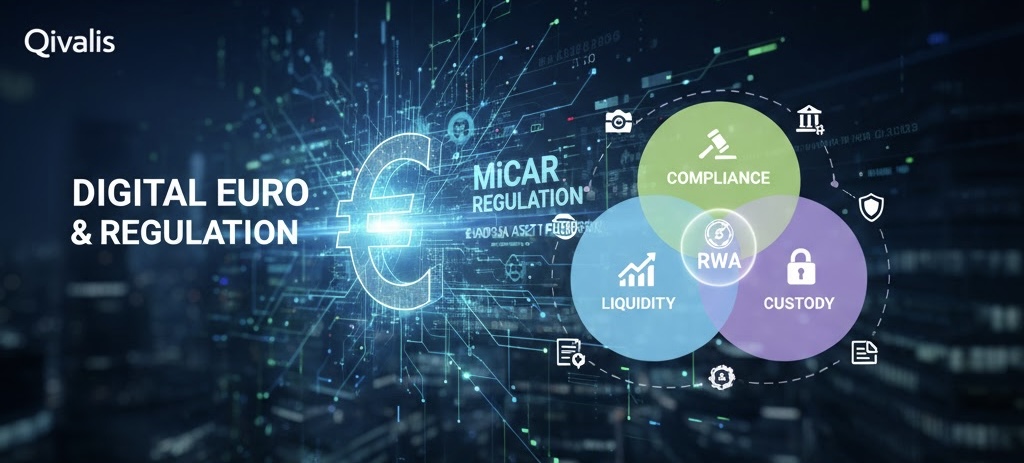
Qivalis is not just another stablecoin; it is a MiCAR-native solution designed specifically to operate under the upcoming EU Markets in Crypto Assets Regulation (MiCAR).
- The Compliance Hook: Qivalis aims to be an E-Money Token (EMT), subject to the strictest banking supervision. This differentiates it instantly from almost every other stablecoin, which often operate in legal gray areas.
- The Utility: The consortium’s goal is to use Qivalis for interbank settlement, corporate treasury management, and cross-border payments. This means the tokenization of the Euro itself is being driven not by consumer hype, but by institutional necessity. The projected market opportunity for a compliant digital Euro settlement layer is estimated in the tens of trillions of Euros.
The “People” Quote: Institutional Validation
This move proves that the biggest hurdle in blockchain adoption isn’t technology—it’s trust.
“The launch of Qivalis by these ten European financial leaders is the clearest signal yet that institutional finance is ready to tokenize. The banks realize the future of capital markets is digital, and they are using their influence to write the rules. This eliminates the counterparty risk that keeps most institutional investors on the sidelines.”
Why You Need MiCAR Knowledge Now
Qivalis’s success will dictate the compliance standards for all future European RWA and DeFi projects. Understanding the difference between an ART (Asset-Referenced Token) and an EMT (E-Money Token)—the key regulatory distinction Qivalis is banking on—is no longer academic; it’s essential to operating in the EU digital asset market. If you work in finance, tech, or compliance, this shift requires immediate upskilling.
Stop Guessing. Master the Rules: Don’t just read the news about Qivalis; understand the legal framework that created it. Unlock the complete regulatory foundation by diving into our structured guide, “MiCAR Deep Dive: The Differences Between ARTs and EMTs,” on our social pages join us and stay informed
About The Author